 English
 Indian
 العربية
 Español
 Deutsch
 Türkçe
 Русский
 Français (Afrique)

Regelkunde in East Lake: Youngs Bunker-Schuss trifft Schefflers Ball auf dem Green


Beim Tour Championship in East Lake sorgte eine seltene Regelszene für Aufsehen: Cameron Youngs Schlag aus dem Bunker kollidierte direkt mit dem auf dem Green liegenden Ball von Scottie Scheffler – live auf CBS und sofort viral. solvita.blog
Es sind die Momente, die man im Golfsport so schnell nicht vergisst: Cameron Young steht im Bunker, schlägt an – und sein Ball trifft mitten auf dem Green den Ball von Scottie Scheffler. Was wie eine Szene aus einem Lehrfilm über die Regeln des Golfspiels wirkt, ereignete sich tatsächlich beim diesjährigen Tour Championship im East Lake Golf Club in Atlanta. CBS übertrug die Szene live, die sozialen Netzwerke griffen sie innerhalb kürzester Zeit auf.
Was genau geschah
Young spielte seinen Ball aus dem Bunker in Richtung Green – ein alltäglicher Vorgang. Ungewöhnlich war, was folgte: Der Bunker-Schuss traf direkt den auf dem Grün liegenden Ball Schefflers. Zwei Bälle zweier absoluter Tour-Schwergewichte, ein direkter Treffer, Live-Publikum auf CBS. Die Szene ging sofort viral.
Was sagen die Regeln des Golfspiels?
Die entscheidende Frage lautet: Welche Konsequenzen hat ein solcher Vorfall nach den aktuellen Regeln des Golfspiels? Die Antwort findet sich in Regel 11.1b und ist für viele Golferinnen und Golfer überraschend eindeutig.
- Keine Strafe für Young: Da Young seinen Schlag aus dem Bunker spielte – also nicht vom Putting Green – greift die Ausnahmeregelung für Schläge vom Green nicht. Nach Regel 11.1b wird in diesem Fall kein Strafschlag verhängt.
- Keine Strafe für Scheffler: Auch der Besitzer des getroffenen Balls bleibt straflos.
- Youngs Ball: Er wird gespielt, wo er zur Ruhe kommt – ohne Strafschlag.
- Schefflers Ball: Er wird auf seinen ursprünglichen Standort zurückgelegt. War dieser nicht exakt bekannt, muss der Ort so genau wie möglich rekonstruiert werden.
Wichtiger Hinweis: Die Ausnahme im Zählspiel – zwei Strafschläge für den Spieler – gilt ausschließlich dann, wenn beide Bälle auf dem Putting Green liegen und der Schlag ebenfalls vom Putting Green ausgeführt wird. Das war hier ausdrücklich nicht der Fall, da Young aus dem Bunker spielte.
Young mit Gala-Runde, Scheffler holt FedEx-Cup-Titel
Die kuriose Szene ereignete sich in einem ansonsten spektakulären Turnier. Cameron Young lieferte in der zweiten Runde eine außergewöhnliche Vorstellung ab: Mit einer 62er Runde – acht unter Par – schoss er sich mit 13 getroffenen von 14 Fairways und einem 41-Fuß-Eagleputt am 18. Loch eindrucksvoll ins Turnier.
Am Ende sicherte sich Scottie Scheffler den Sieg beim Tour Championship und holte sich damit zum zweiten Mal den FedEx Cup. Für den Weltranglistenersten war es der 22. Triumph auf der PGA Tour – ein weiterer Beleg seiner Dominanz in der aktuellen Ära des Profigolfs.
Lehrreicher Moment für alle Golfer
Szenen wie diese erinnern daran, dass die Regeln des Golfspiels mitunter komplexer sind, als sie auf den ersten Blick wirken – und dass selbst auf der höchsten Ebene des Sports Situationen entstehen, die für ungläubiges Staunen sorgen. Für Amateurgolferinnen und -golfer lohnt es sich, Regel 11.1b zu kennen: Der Unterschied zwischen einem Schlag vom Green und einem Schlag von außerhalb des Greens ist in solchen Fällen entscheidend – und kann Strafschläge kosten oder ersparen.
Dieser Beitrag wurde mit Unterstützung von KI erstellt und redaktionell geprüft.
The post Regelkunde in East Lake: Youngs Bunker-Schuss trifft Schefflers Ball auf dem Green appeared first on Golf Post.
I placed two Game Boy controllers in the hands of a casual retro gamer, but the "winner" comes with caveats
I've spent a chunk of time pitting the 8Bitdo FlipPad against the GameSir Pocket Taco in a Game Boy controller gauntlet, but I'm struggling to declare an overall winner. Both gamepads take pretty different approaches to arming your doomscroller with physical buttons, so for a fresh perspective, I handed both off to someone who doesn't test handhelds on the daily.
Who is this Game Boy gamepad testing guinea pig I've drafted in? Well, it's my partner in retro console collecting crime who isn't employed to test the best retro controllers available to the masses, but certainly enjoys playing the oldies on portables old and new. By handing both the 8Bitdo FlipPad and GameSir Pocket Taco to someone who's got a comparatively casual perspective, I hoped that I'd be enlightened with a new third-party perspective that'd help me wrap up my testing.
8Bitdo FlipPad vs GameSir Pocket Taco
8Bitdo FlipPad
- Direct USB-C input
- Slim design
- No back shoulder buttons
- L and R buttons on the face
- Dome contact buttons
- Button remapping via software
GameSir Pocket Taco
- Bluetooth and wired input
- Chunky double-sided shell
- Back shoulder buttons
- Membrane buttons
- Button remapping via app
I get it, some of you may think this sort of A/B testing is overkill for a set of four face buttons and a d-pad. However, with both the GameSir Pocket Taco and 8Bitdo FlipPad targeting two very specific types of players who could be easily lured by the prospect of easy Pokémon access, I want to identify every pro and con possible. Therefore, I reckon drafting in a fresh pair of non-reviewer hands is absolutely justified and should help you pick out the perfect Game Boy pad.
FlipPad preconceptions
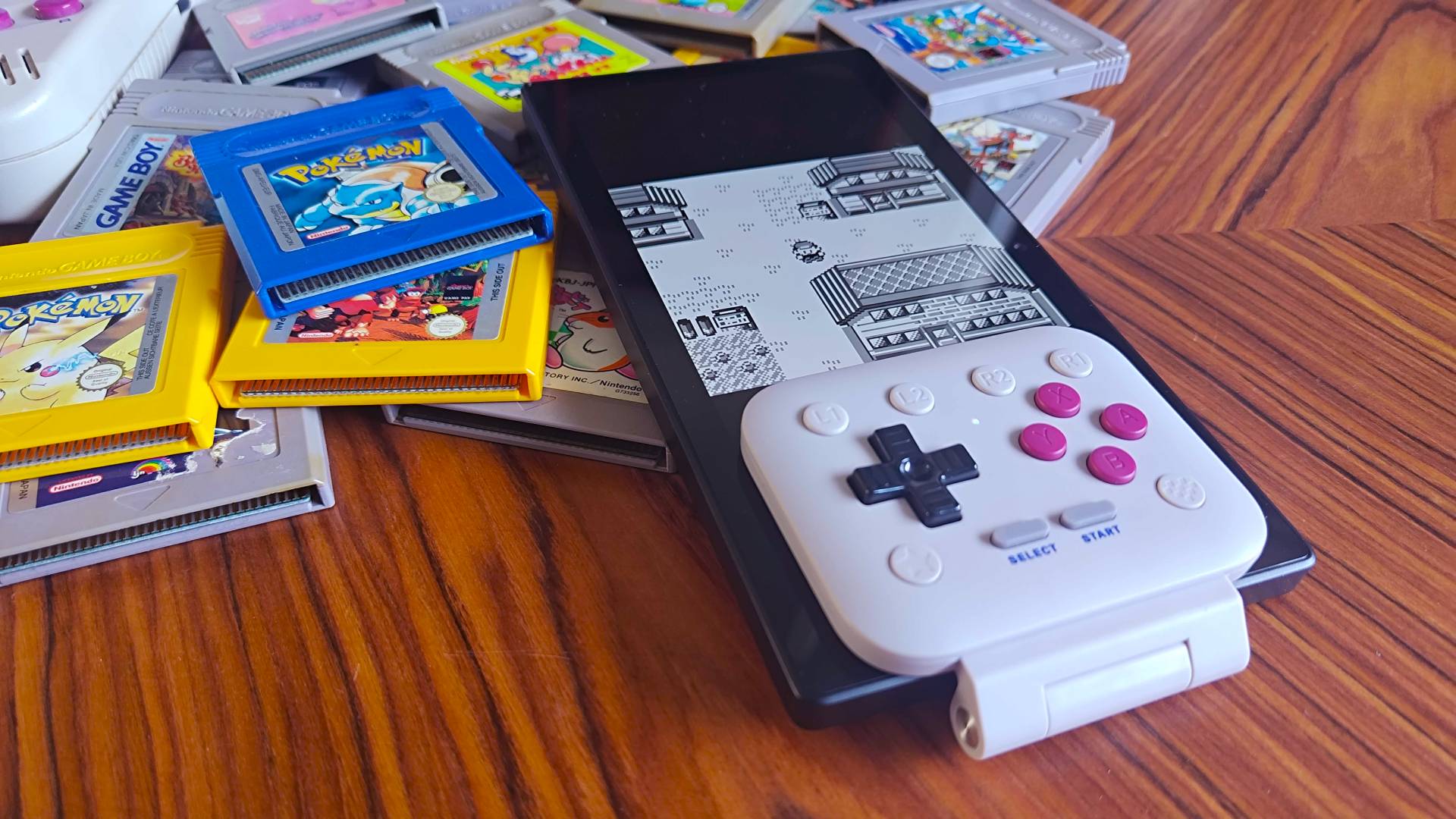
Again, I've already put the 8Bitdo FlipPad through its paces, although the daft placement of the Asus ROG Phone 8's USB-C port meant I had to use the Razer Edge as a very long Game Boy before borrowing my partner's Google Pixel. That testing was enough for me to form my own likes and dislikes, in turn giving me a notion of how other players may feel about the gamepad.
Starting off with some of the FlipPad's strengths, I really feel like 8Bitdo is onto a winner with its sleek profile. There's far less plastic bulk to the hinged USB-C controller than the Pocket Taco, and that helps it feel less like a bulky add-on. The clicky dome switch buttons also hit tactile high notes compared to standard membranes, which also feed into a premium vibe.
The FlipPad's slightness comes at a cost, though, particularly when it comes to the USB-C. Pardon the pun, but the controller's fit and grip hinges solely on the bottom connector, and the fact that it's "one size fits all" creates some problems. My main gripe lies with the fact that unless you pick the exact right thickness of case, you're likely going to experience some side-to-side wobble, which isn't great for more frantic games (shmups like Truxton are a wiggly nightmare).
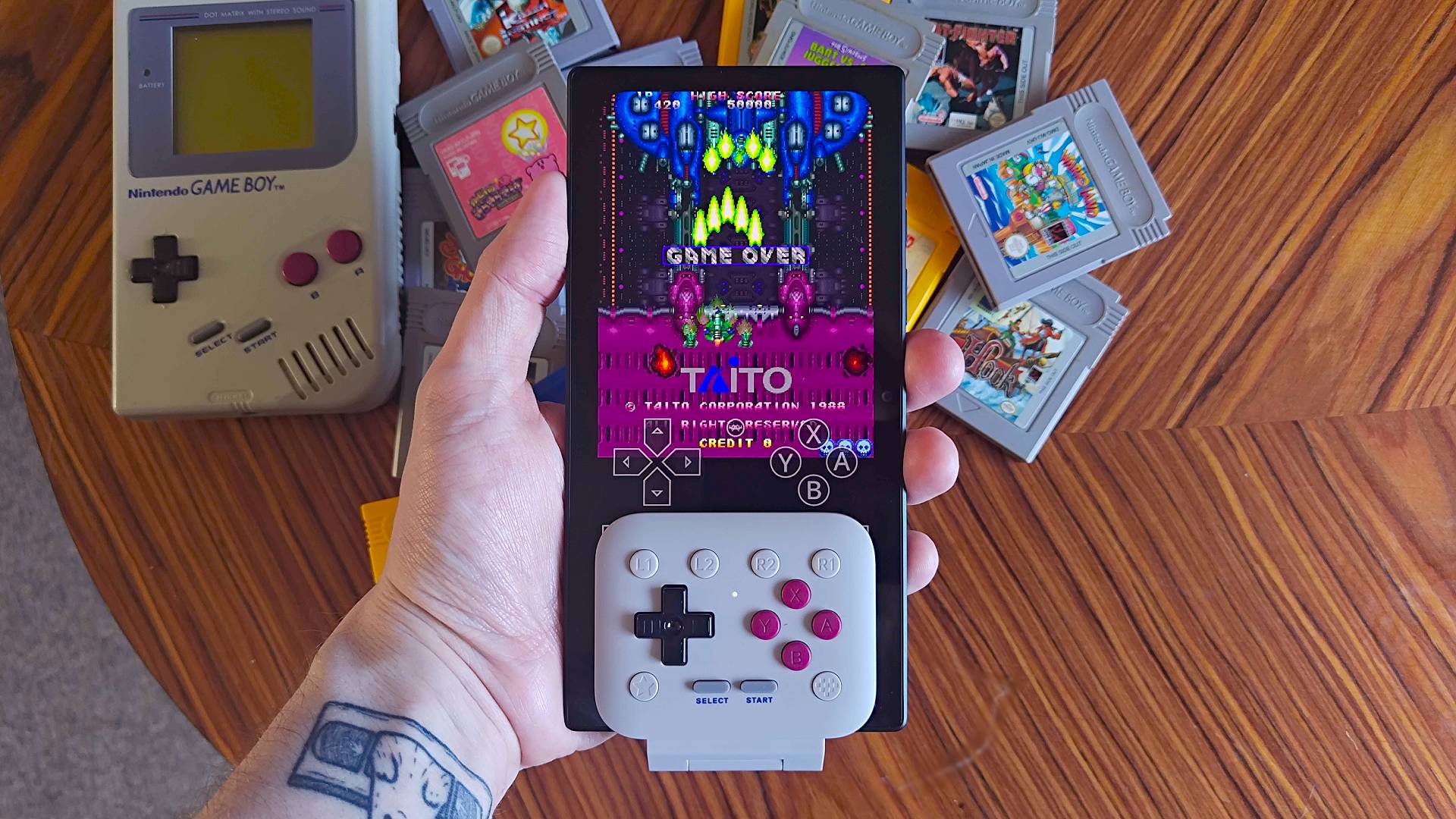
I'm also wary that by containing the controller to just the phone screen, it subjects players to the usual ergonomic caveats. By that, I mean your fingers will just be hanging around at the side or back of your device rather than resting on some shoulder buttons (something the Pocket Taco provides). Surprisingly, though, none of this seemed to bother my volunteer test subject, and while initially hesitant to play games on her freshly modified Google Pixel 7, she ended up getting right into Zelda: Link's Awakening using both pads.
A bit of A/B Game Boy testing
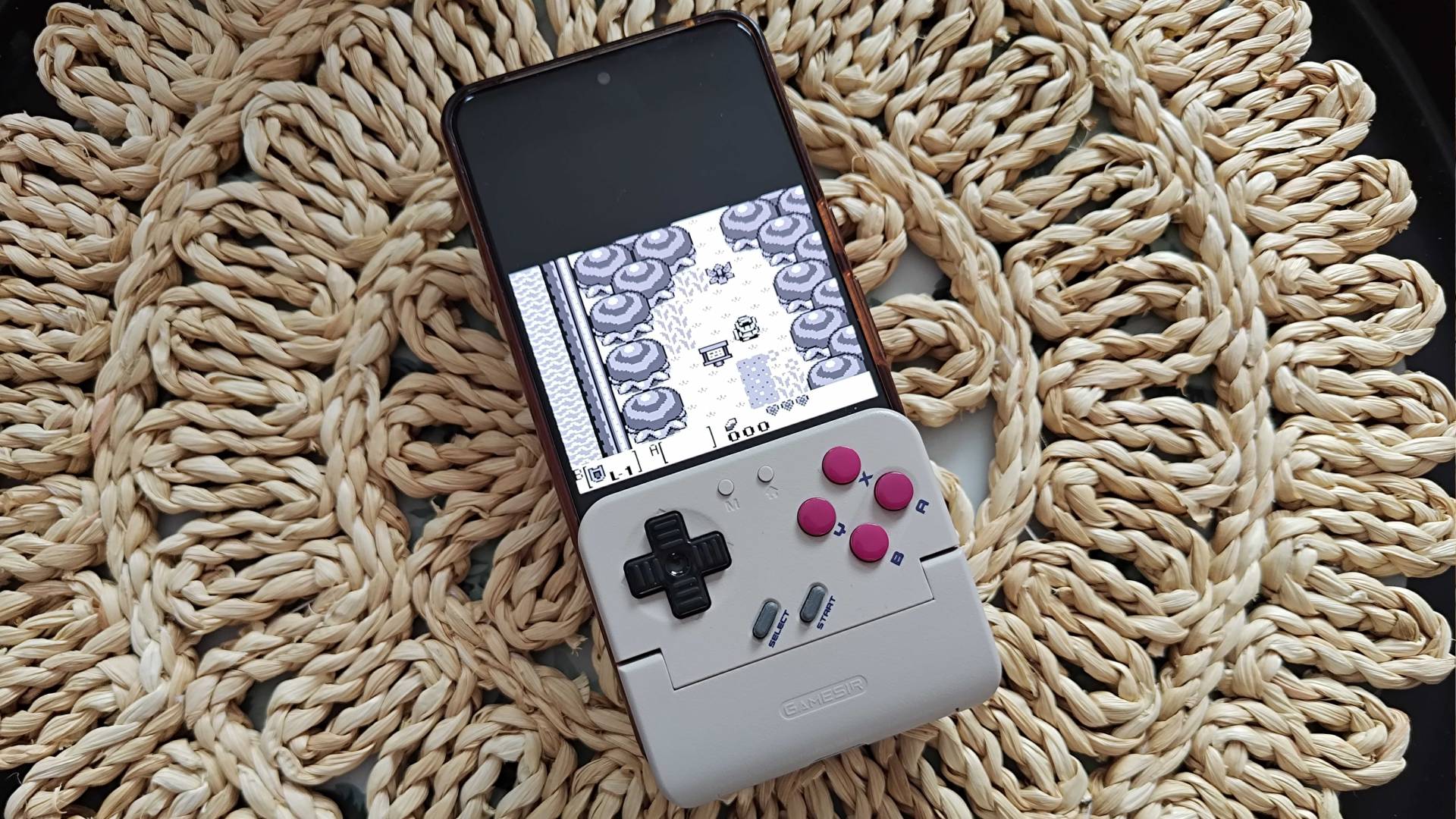
I don't want to imply that I turned my beloved into a Game Boy guinea pig, but I did sit back and observe her as she used both the 8Bitdo FlipPad and GameSir Pocket Taco. In an effort to pick up on any third-party ergonomic quirks and real-life gameplay benefits, I watched as she roamed around Koholint Island for the first time while checking in to ask for takes on the d-pad, button tactility, and overall feel.
I immediately noticed that her index fingers would rest on the upper sides of the phone when using the FlipPad, and I figured this was due to the lack of junk in the trunk. It turns out this is more of a weird ergonomic preference, though, as she would still pop her digits on the side when using the GameSir Pocket Taco. To me, this was a sign that while the latter should provide better ergonomics in theory, it's easy to see why 8Bitdo went with a sleeker, front-focused design based on play habits.
Continuing to quash my expectations, my helpful test subject also informed me that she preferred the feel of the FlipPad's clicky D-pad over the arguably more authentic Pocket Taco's membrane directionals. This is despite the fact that she owns several real Game Boy handhelds, as while GameSir's design should feel close to those portables, I was immediately informed that the controls felt "mushy".
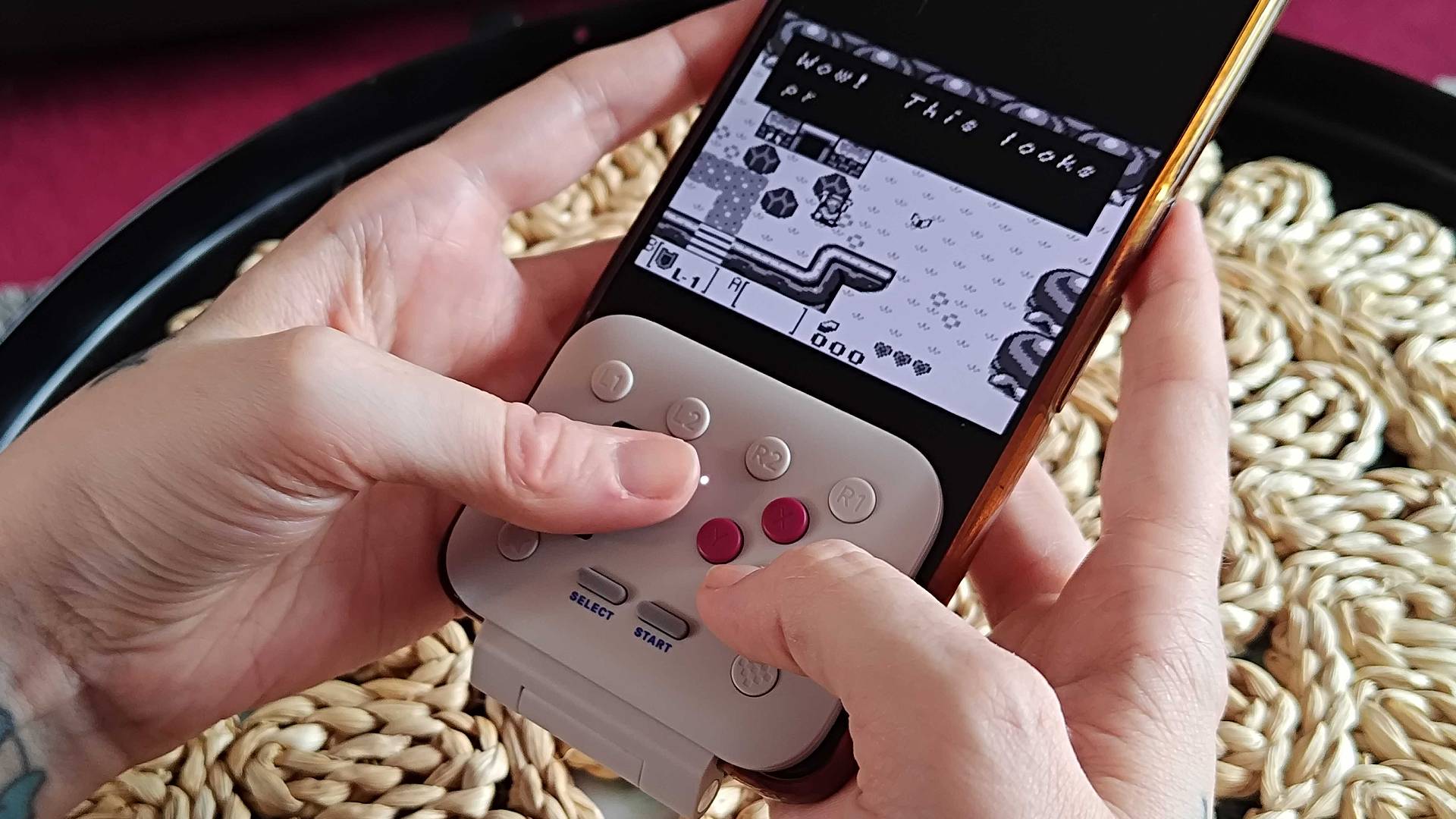
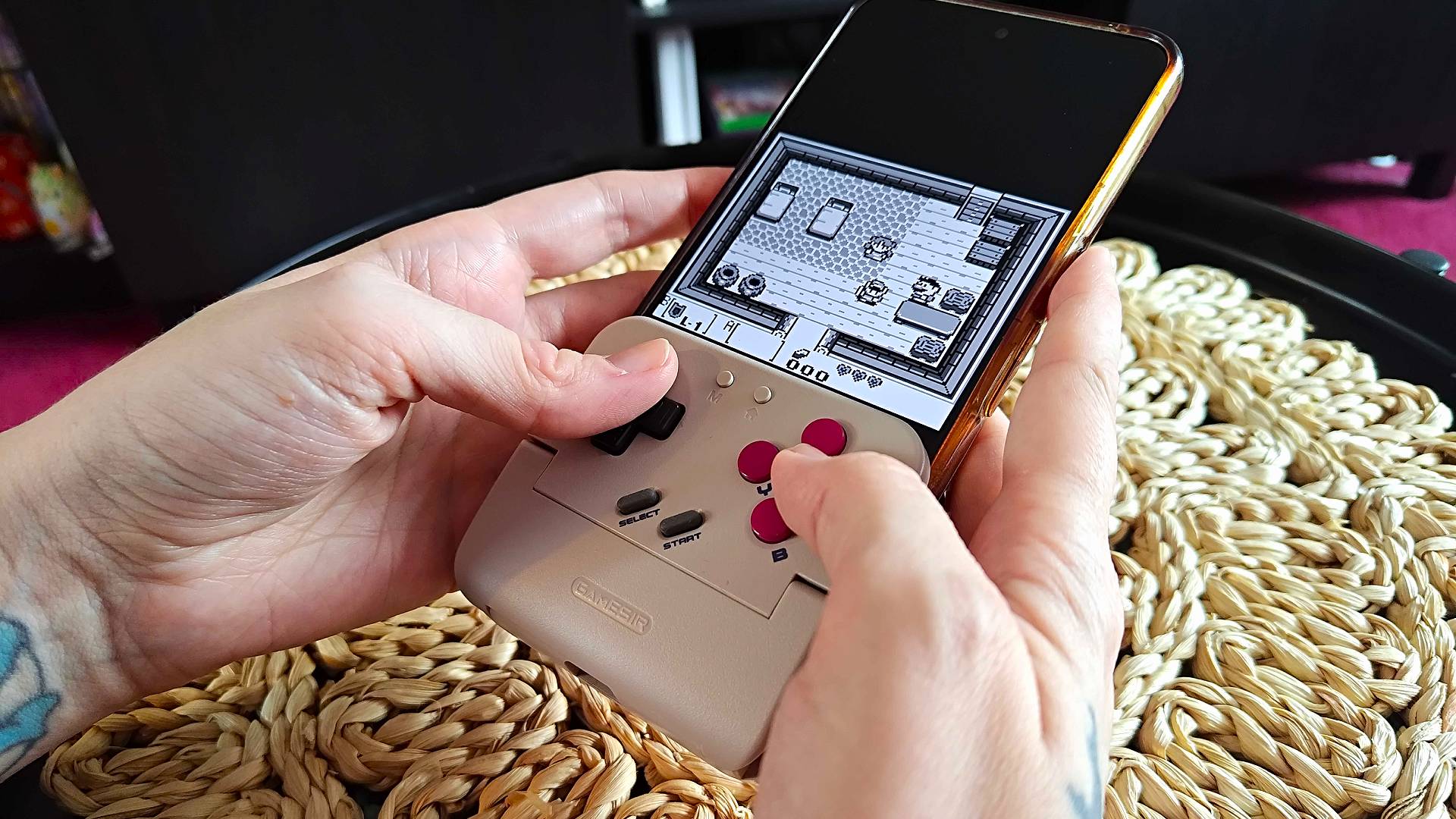
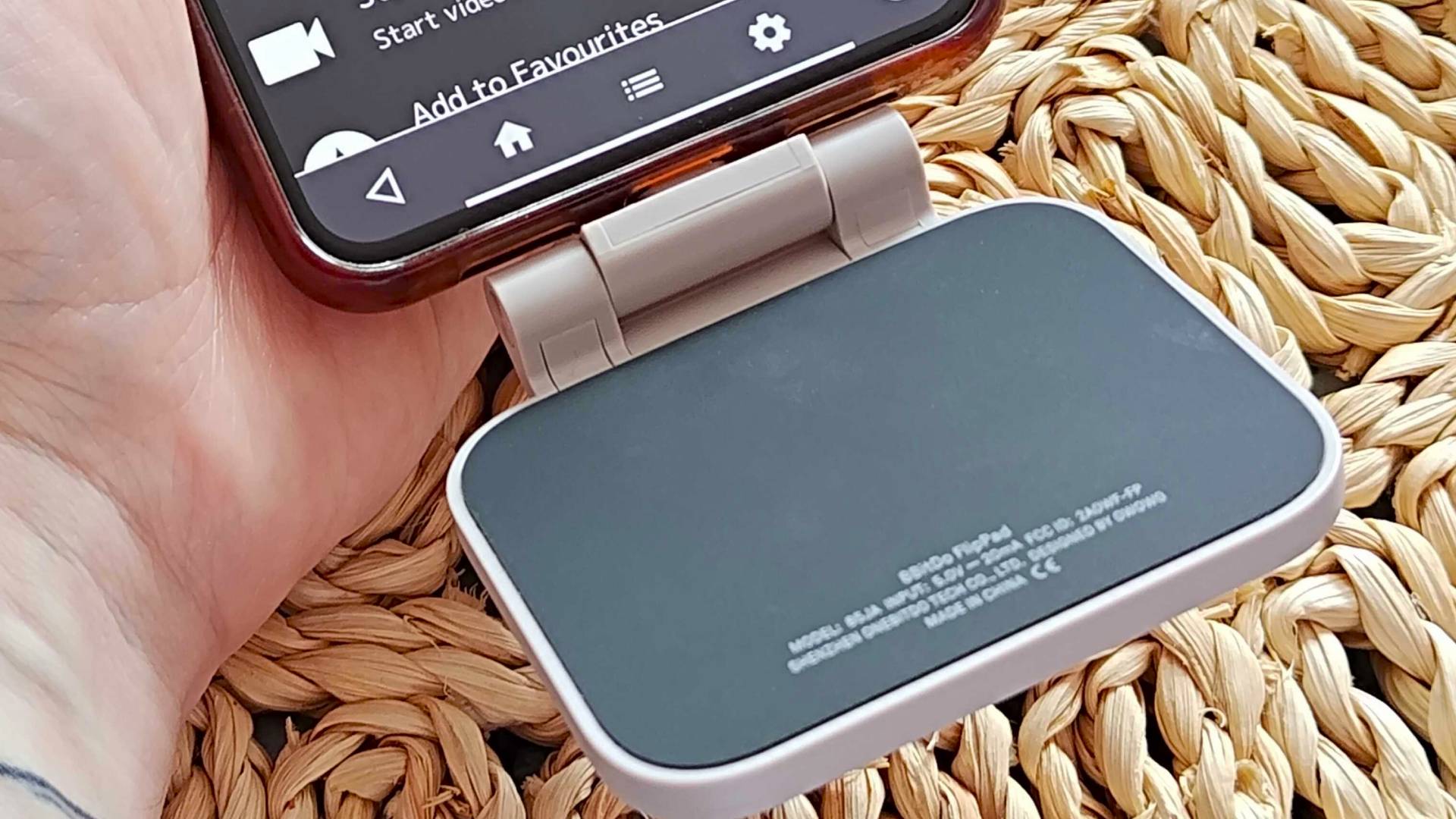
One complaint that re-emerged with the 8Bitdo FlipPad was indeed the wiggly USB-C connector. My volunteer's phone normally uses a standard shell case with a cut-out for chargers, and while the controller does fit, it still leaves a gap. That's a little strange considering my ROG Phone 8 Pro Devilcase is too thick for the connector, and it feels like you need to buy something very specfic for an exact fit.
I'm not sure which cases the FlipPad is actually compatible with, but I do know that without one as a packer, the leftover tolerance will lead to some nervous "oop" sounds when it moves around slightly. You're more likely to notice this when making more frantic d-pad movements, like when, say, encountering enemies on the shores of Link's Awakening for the first time and being caught off guard.
Ultimately, the wiggle served to break any sort of "my phone is now a Game Boy" immersion the FlipPad is aiming to achieve. Comparatively, the Pocket Taco's sandwich approach provides a steadier grip, even if that means adding extra bulk to the back and front and swapping out direct USB-C connectivity for Bluetooth.
The FlipPad steals the crown (with caveats)
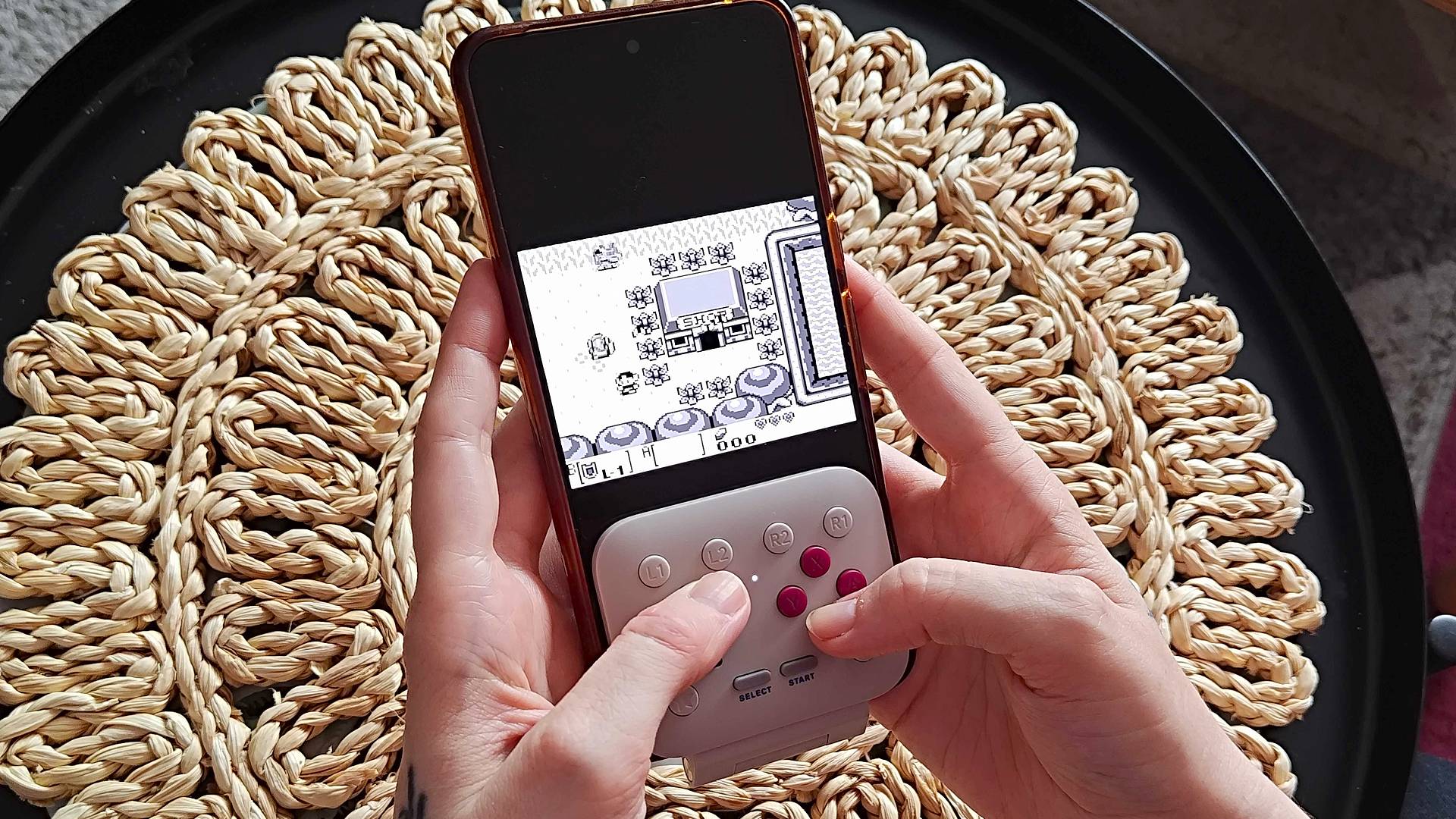
After an extended stint running around exploring Koholint Island, then foolishly wrapping things up by attacking some chickens, my partner finally picked the FlipPad as her preferred Game Boy controller. That at least proves that 8Bitdo has nailed things in terms of comparative feel and button quality, both of which I'd assumed the controller maker had in the bag anyway.
However, the wiggly USB-C connectivity haunts what would otherwise be a stellar Game Boy mobile controller experience. It's something my playtester said would put them off playing anything more than Pokemon on their phone, even though they prefer 8Bitdo's approach to the bulkier, non-clicky Pocket Taco.
This extra user test will absolutely help back up some of my thoughts for a wider 8Bitdo FlipPad review, but I'm aware it largely focuses on casual play. Having already spent a chunk of time with the GameSir Pocket Taco, I know it provides players with extra perks like actual shoulder buttons and compatibility with other retro consoles, and that will ultimately factor into whether it's worth grabbing instead of its USB-C competitor.
Check out the best retro handhelds if you're seeking a dedicated portable console.
Jerry Seinfeld skal opptre på en komediefestival i Lisboa, og gjestekunstnere trekker seg i protest
Flere komikere, skuespillere, musikere og kunstnere har trukket seg fra MEO Commedia a La Carte Fest, den første internasjonale humorfestivalen i Lisboa, som finner sted fra 29. oktober til 1. november 2026, med Jerry Seinfeld som spesiell internasjonal gjest, der han skal opptre live for første gang i Portugal.
Seinfeld har offentlig støttet Israel i Gaza-konflikten, og i fjor sammenlignet han utsagnet «Free Palestine» med Ku Klux Klan i et foredrag ved Duke University. Seinfeld sa at å si «Free Palestine» er som å si «Jeg liker ikke jøder», og la til at Klanen er «litt bedre fordi de er mest ærlige».
Ingen av artistene som trakk seg, pekte direkte på Seinfeld, men festivalen har mottatt hyppige oppfordringer på sosiale medier om å fjerne den amerikanske komikeren.
I sin uttalelse sa skuespillerinnen Inês Aires Pereira at «ett av navnene forsvarer iherdig ideer og handlinger som jeg anser som uforsvarlige», og la til at «vi kan ikke relativisere eller normalisere et folkemord».
Komikerduoen Cebola Mol la ut et bilde av en vannmelon, som ofte assosieres med det palestinske flagget, og skrev at «vi skal feire rettferdighet, frihet og glede sammen med dere ved en annen anledning».
Andre artister som trakk seg, inkluderer sangerne Carolina Deslandes, Tatanka og Bárbara Tinoco, som skulle opptre sammen, gruppen Conjunto Cuca Monga, komikeren Pedro Tochas og billedkunstneren Vhils (Alexandre Farto), som rapportert av The Hollywood Reporter.
Following Stellar Blade: Blood Rain AI controversy, Shift Up lead says they're taking concerns "seriously" but the tech still has "a lot of influence and impact on game development"
After backlash over the controversial Stellar Blade: Blood Rain AI music video, Shift Up's chief technology officer says the studio has been taking concerns "seriously," and now wants to "make a clear separation" between what it considers "experimental content" and its main "game-related content."
Following the Stellar Blade sequel's reveal during Summer Game Fest, an official AI-generated music video starring new protagonist Evie was released and met with immediate vitriol. Shift Up wasn't attempting to hide anything – fine print at the end of the video stated: "This video was created using the Game resource from Stellar Blade: Blood Rain and regenerated with AI support."
But honesty wasn't the concern here. People have many reasons to dislike AI, from its general laziness to the environmental concerns that persist regardless of whether someone is feeding their own work into the machine (it's a whole other issue if it's reproducing the work of others). In a new interview with The Gamer, Stellar Blade technical director and Shift Up CTO DongKi Lee has explained why the video was made in the first place and the studio's thoughts on using the technology moving forward.
"The reason we revealed that music video was to show more of the beauty of Stellar Blade: Blood Rain," the dev says. "We wanted to show the world view and the character Evie. We just wanted to show a little more of each, and we did that as part of the content.
"But then we do take seriously and importantly what the fans have been saying, and the concerns they have been expressing about the music video, and from now on we definitely want to make a clear separation between the two, like game-related content and what we would call experimental content, like what we are experimenting with," he continues.
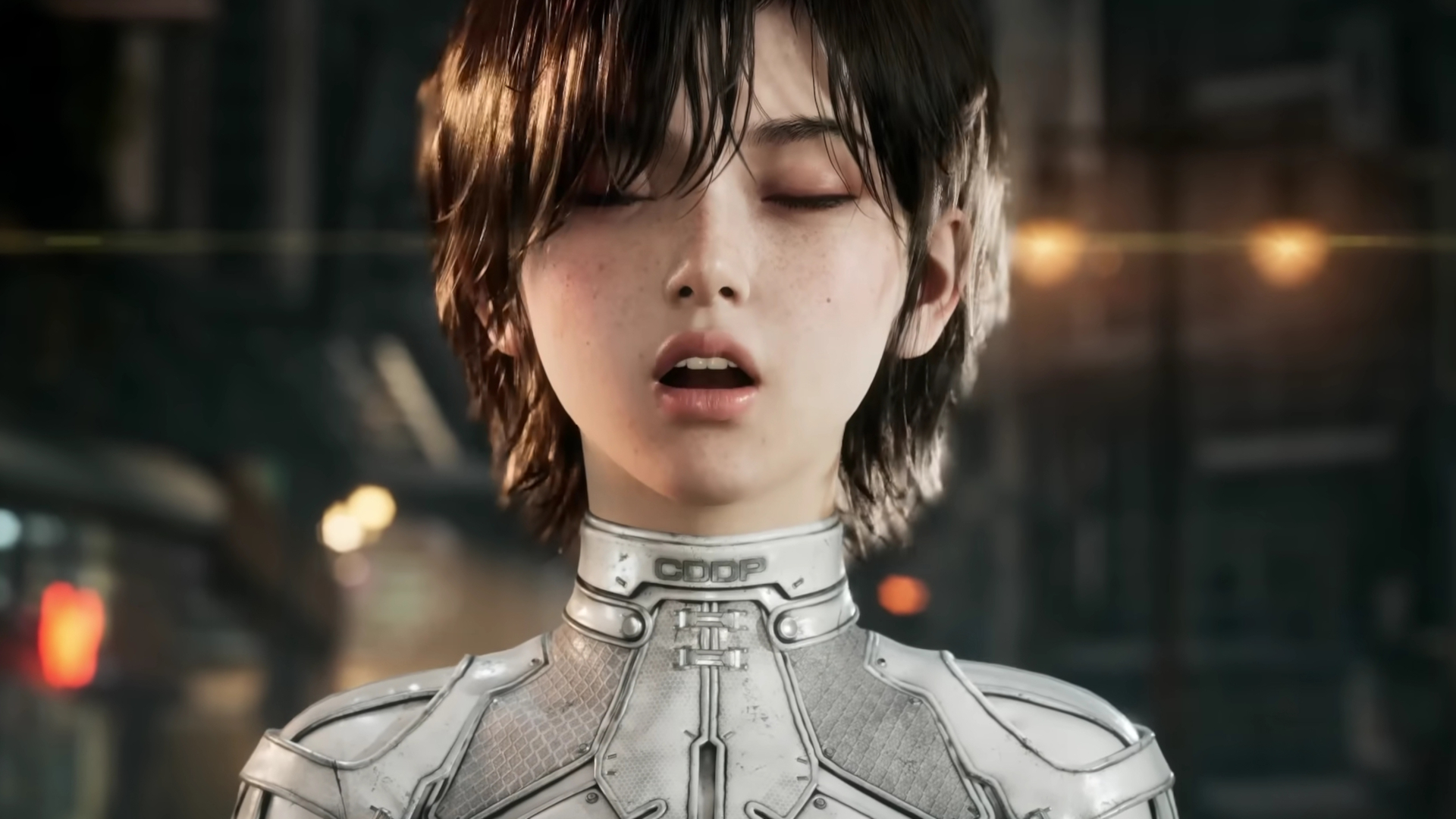
Shift Up CEO Kim Hyung Tae previously responded to the backlash over the music video himself, although perhaps not in the way Stellar Blade fans were hoping for. At the time, he stated that "Evie, the character at the heart of this video, was created from head to toe by our talented artists and modelers through more than a year of dedicated work," and that "the AI is not creating her from scratch," but rather "rendering and presenting the character based on the data, designs, and craftsmanship our team created."
The thing is, as folks pointed out at the time, this was never really the worry. In fact, one of the main sentiments of the initial kickback from the video was the idea that using AI to regurgitate Evie's design was an insult to the studio's human artists, and that the company had the talent available to create something like this without turning to the slop machine.
The CTO's latest comments do, at least, seem a little more open to the negative feedback, but anyone hoping for the studio to drop the technology like it's a burning turd might still be disappointed.
"AI has a lot of influence and impact on game development," he continues, adding: "But when we are using certain technologies or tools, what's important is the direction and purpose they serve. It needs to be used in a way that supports the developers' creativity, know-how, and skills.
"It should be used as a tool. That's the direction, and its purpose would be to make a great, high-quality game."
This sentiment shouldn't be too surprising, however. The Shift Up CEO previously expressed his belief that AI is a necessary tool for South Korean studios to compete with larger studios in the US and China, so the Stellar Blade creators are clearly in favor of using the tech when it can.
Remothered: Red Nun’s Legacy – Demo auf Steam verfügbar
Stormind Games, das Entwicklestudio hinter „Remothered: Red Nun’s Legacy“, hat jetzt eine Demo-Version in Form eines zeitlich limitierten Playtests auf PC (Steam) veröffentlicht. Diese Demo des Horrorspiels wird bis zum 14. September 2026 verfügbar sein. Hier geht es zur Steam-Seite des Spiels: KLICK!
In „Red Nun’s Legacy“ taucht ihr in eine Welt ein, in der nichts so ist, wie es scheint. Bei der Erkundung einer verlassenen Villa müsst ihr euren Verstand einsetzen, um beunruhigende Enthüllungen, Geheimnisse und eine verzerrte Realität zu überwinden und die Wahrheit hinter der Roten Nonne aufzudecken – und das alles, während ihr den unerbittlichen Stalkern entkommt, die es auf euch abgesehen haben.
In der Geschichte des Spiels verschwindet die Tochter von Susan in einem abgelegenen Anwesen am Fuße des Ätna. Um sie zu finden, muss sich Susan in einen Albtraum aus versteckten Räumen, vergrabenen Erinnerungen und unerbittlichen menschlichen Verfolgern begeben. Dabei wird sie die vergessenen Ursprünge der Roten Nonne aufdecken und Geheimnisse enthüllen, die tief in ihre eigene Familie hineinreichen.
„Remothered: Red Nun’s Legacy“ ist der dritte Teil der „Remothered“-Reihe und erscheint am 27. Oktober 2026 für PC (Steam, GOG und EGS), Nintendo Switch 2, Xbox Series X/S und PlayStation 5. Die Webseite zur Reihe ist hier zu finden: KLICK! Ein paar weitere Informationen gibt es auch bei uns (siehe hier).
Quelle: Pressemitteilung